
The Design Principle
Permanent rinse-clean air purifier filters represent a specific approach to the disposable filter problem: instead of designing filtration around a medium that accumulates particles until it is saturated and must be replaced, the system collects particles on a surface that can be cleaned and returned to its original collection capacity. The economic model shifts from periodic replacement to periodic maintenance.
The most common implementation is the electrostatic precipitator: air passes through a high-voltage ionization stage that charges airborne particles, which then collect on grounded plates through electrostatic attraction. The charged plates accumulate a visible layer of particulate over time – in households with pets or cooking activity, this becomes visible within two to three weeks. The plate is removed, rinsed, dried, and reinstalled.
The alternative implementation is ionic filtration with a collection surface – less common and with different maintenance characteristics, but operating on the same principle of particle attraction to a washable surface rather than capture in a disposable medium.
Practical Cleaning Process
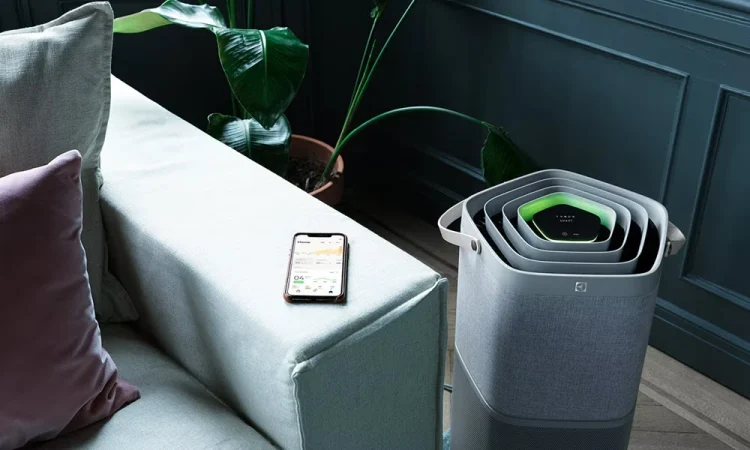
Air purifier with a permanent filter you can rinse maintenance follows a consistent process: power off the unit, remove the collection plate through whatever access mechanism the specific unit uses, carry it to a sink, rinse under running water while gently wiping if needed to dislodge accumulated particulate, allow to drain, and dry completely before reinstallation. The process is typically 10 to 15 minutes active time plus the drying period.
The drying period is the most commonly underestimated element of the maintenance cycle. In low-humidity environments, a collection plate may air dry in 2 to 3 hours. In high-humidity environments – bathrooms, basements, during summer in humid climates – drying may take 4 to 6 hours or require gentle oven drying at very low temperature to accelerate. Reinstalling before complete drying causes operational problems that users sometimes misattribute to equipment failure.
EPA Indoor Air Quality recommends following manufacturer maintenance schedules as the baseline for air cleaner upkeep, while noting that household conditions with elevated particle loads – pets, cooking, high outdoor particulate infiltration – often warrant more frequent maintenance than the standard schedule specifies.
Who Benefits Most
Rinse-clean air purifiers make the most economic sense for households that run air purifiers continuously over multi-year periods. The savings from eliminated filter replacement costs – typically $60 to $150 annually for comparable HEPA units – accumulate meaningfully over three to five years. Households that use air purifiers seasonally or intermittently recoup a smaller fraction of the upfront price premium.
Households with household members who have respiratory sensitivities or allergies tend to be the most consistent air purifier users – running units year-round, continuously, in multiple rooms. These households also have the most to gain from consistent air quality maintenance and the most motivation to maintain the cleaning routine that keeps washable-filter units performing well. The alignment between the use case and the maintenance requirement makes this category particularly well-suited to allergy and asthma households.
The environmental case for washable filter units is worth noting alongside the economic one. Disposable HEPA filters – particularly multi-layer designs with carbon stages – are not recyclable and represent a consistent waste stream for households running multiple air purifiers. Eliminating this waste stream is a secondary benefit that some buyers weight meaningfully in their purchase decision.