
Few things jolt you awake quite like the sudden, excruciating cramp of a calf muscle seizing in the middle of the night. Or perhaps it’s a dull, aching throb in your lower leg that makes finding a comfortable position impossible. Either way, nighttime calf pain is a common complaint with several distinct causes—and the fix depends on knowing which one you’re dealing with.
Calf muscle pain at night is most commonly caused by nocturnal leg cramps (charley horses), restless leg syndrome (RLS), poor circulation, dehydration, or muscle overuse during the day. While most instances are harmless, less commonly, this pain can signal a deep vein thrombosis (blood clot) or nerve-related issues that require prompt medical attention.
Type 1: Nocturnal Leg Cramps (The Sudden Seizure)
This is the classic sudden-onset calf cramp that wakes you from sleep. It’s a sharp, intense involuntary muscle contraction – often lasting 30 seconds to several minutes – that leaves the calf feeling sore for hours afterward.
Why it happens:
- Muscle fatigue from prolonged activity during the day
- Sitting or lying in a position that shortens the calf muscle (toes pointed down while sleeping)
- Dehydration – reduces electrolyte balance that governs muscle contraction
- Electrolyte imbalances – particularly magnesium, potassium, and calcium deficiency
- Prolonged sitting or inactivity (reduced circulation)
- Medications – diuretics, statins, and some blood pressure drugs are known triggers
What to do during a cramp:
- Flex your foot upward (pull toes toward your shin) – this stretches the calf and forces the muscle to release
- Stand up and put weight on the leg – straightening the muscle helps
- Massage the calf firmly
- Apply heat with a warm cloth or heating pad after it passes
Type 2: Restless Leg Syndrome (The Ache That Won’t Quit)
Restless Leg Syndrome (RLS) is a neurological condition that causes uncomfortable sensations in the legs – described as creeping, crawling, aching, throbbing, or pulling – that are worst at rest and at night, and temporarily relieved by movement.
| Feature | Nocturnal Cramps | Restless Leg Syndrome |
|---|---|---|
| Pain type | Sudden, sharp cramping | Uncomfortable aching, crawling, itching sensation |
| Onset | Abrupt, wakes from sleep | Builds gradually in the evening/night |
| Relief | Stretching/flexing the foot | Moving the legs, walking |
| Duration | Seconds to minutes | Can persist for hours |
| Movement | Pain stops all movement | Movement temporarily relieves symptoms |
RLS is often linked to iron deficiency, pregnancy, kidney disease, and certain medications. It responds to iron supplementation when iron is low, and to medication management in more severe cases.
Type 3: Poor Circulation
When blood flow to the lower legs is reduced – due to peripheral artery disease (PAD) or venous insufficiency – nighttime leg pain is common.
- PAD-related pain: Often presents as a deep aching or cramping in the calves that worsens at rest (particularly when lying flat) and improves with hanging the legs over the edge of the bed. This is called “rest pain” and signals reduced arterial blood supply.
- Venous insufficiency: Blood pools in the leg veins, causing heaviness, aching, and sometimes swelling – often worse at the end of the day and into the night.
Risk factors for circulation-related calf pain: smoking, diabetes, high blood pressure, high cholesterol, obesity, prolonged sitting.
Type 4: Muscle Overuse or Delayed Onset Muscle Soreness (DOMS)
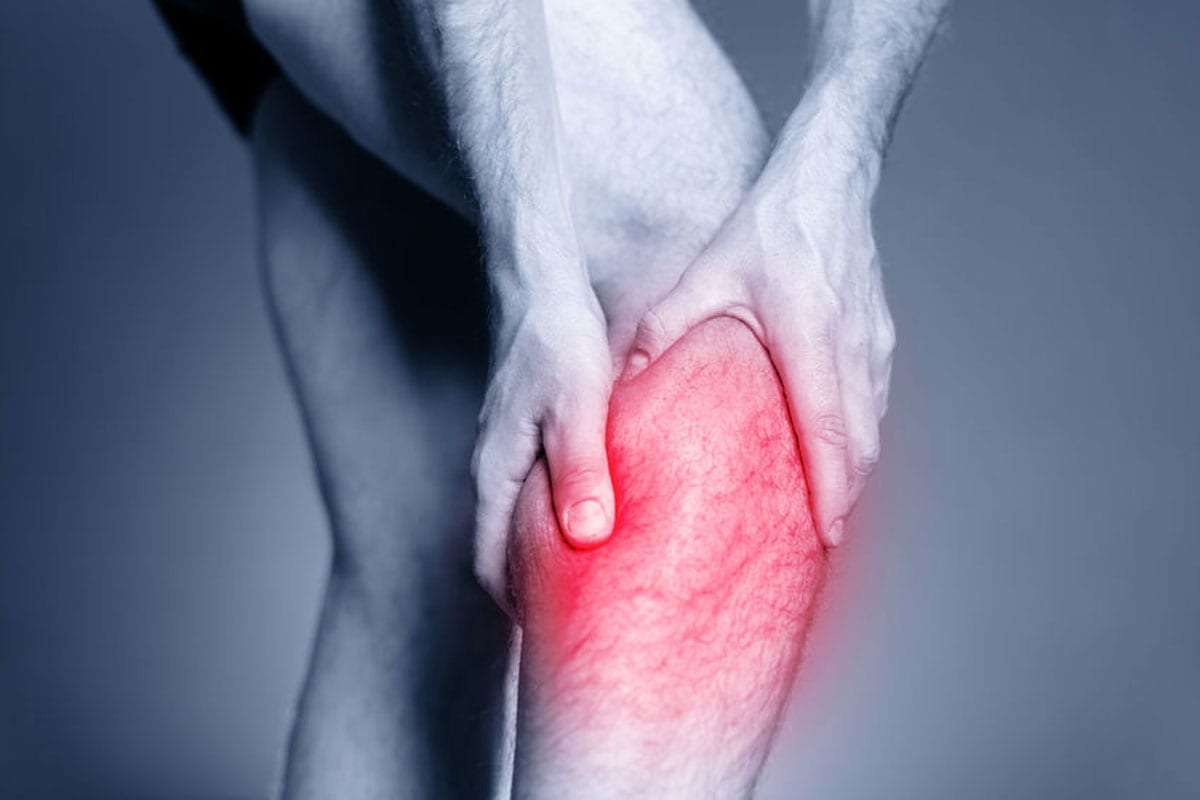
If you exercised heavily, walked long distances, or stood for many hours during the day, nighttime calf soreness is your muscles recovering. This is typically:
- Dull and achy (not sharp)
- Worse when pressing on the muscle
- Present in both calves
- Resolves within 48-72 hours
Type 5: Sciatica or Nerve Compression
The sciatic nerve runs from the lower back down through the buttock and into the leg. When it’s compressed (by a herniated disc, tight piriformis muscle, or spinal stenosis), it can cause burning, tingling, or aching pain in the calf – particularly at night when lying down alters spinal position.
Other neurological causes: peripheral neuropathy (common in diabetes) causes burning or tingling in the lower legs and feet that worsens at night.
The One You Need to Know About: DVT
Deep Vein Thrombosis (DVT) is a blood clot in a deep leg vein. It’s less common than the other causes but far more serious.
Signs of DVT:
- Persistent, significant pain in one calf (not both)
- Swelling, redness, or warmth in the affected area
- A firm, tender cord-like feeling along the vein
Risk factors: Recent surgery, long-haul flights, bed rest, pregnancy, blood clotting disorders, oral contraceptives.
If you suspect DVT – especially if you have risk factors – seek medical attention promptly. An untreated DVT can dislodge and travel to the lungs (pulmonary embolism), which is life-threatening.
Prevention Strategies for Nocturnal Calf Pain
For Cramps
- Stretch the calves before bed: stand facing a wall, heel on the floor, and lean forward gently
- Stay hydrated throughout the day
- Consider magnesium glycinate supplementation – research supports its role in reducing nighttime cramps
- Keep bedsheets loose – tight sheets push the foot into a plantar-flexed position that promotes cramping
- Reduce caffeine and alcohol
For All Types
- Move regularly during the day – avoid prolonged sitting or standing
- Elevate legs in the evening to improve circulation
- Wear compression socks if you’re on your feet all day
When to See a Doctor
See a doctor if:
- Calf pain is persistent, constant, and in one leg only
- There’s visible swelling, redness, or warmth in the leg
- Pain is accompanied by shortness of breath or chest pain (DVT/PE emergency)
- You have risk factors for PAD and pain worsens with rest
- Cramps are nightly and significantly disrupting sleep
- You have tingling, numbness, or weakness alongside the pain
Bottom Line
Nighttime calf pain ranges from the common (leg cramps from dehydration) to the serious (DVT or arterial disease). Most people are dealing with cramps, overuse, or RLS – all very manageable with the right approach. But one-sided, swollen, warm calf pain is always worth getting evaluated to rule out a clot. Know the difference, and act accordingly.